
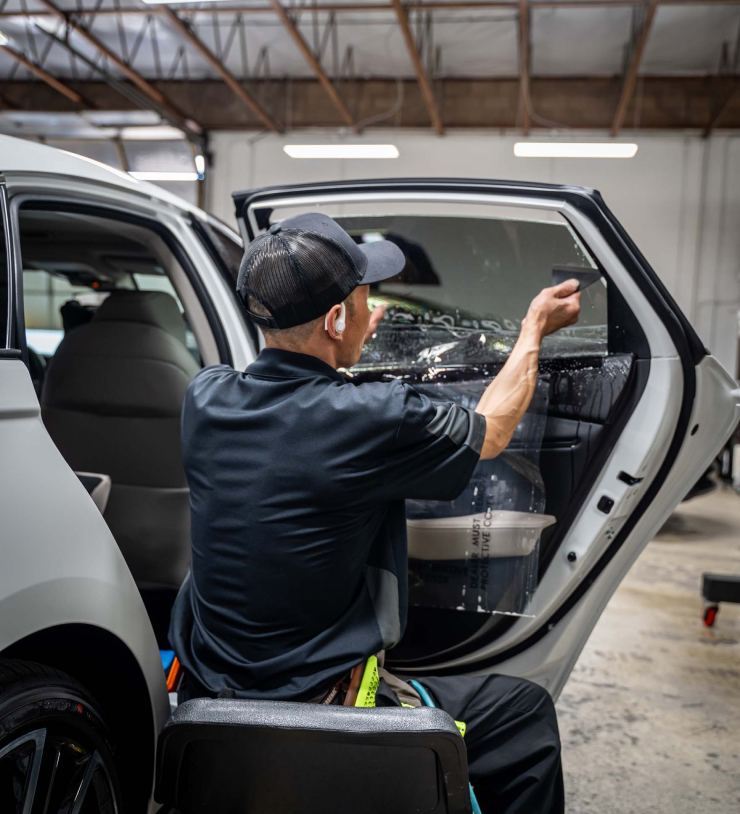
We see plenty of California drivers who want the benefits of darker windows but are wondering, “Is window tinting legal in California?” No one wants to get pulled over or have to remove their window tint after everything is installed. Our team at Sunco Protective Films installs legal, high-quality XPEL window tints with limited lifetime warranties. Here’s how to understand the window tint laws for different types of windows.
Is Window Tinting Legal in California?
Yes, window tinting is legal in California and regulates:
- Front windshield
- Front side windows
- Rear side windows
- Rear windshield
Whether your window tint is legal depends on its Visible Light Transmission (VLT), or how much light is allowed to pass through the glass.
What Are California’s Window Tint Laws?
There’s no single, universal tint law in California for every window. Here’s a breakdown of what to expect:
Front Windshield
California law generally only allows for a narrow strip of non-reflective window tint on the top portion of your windshield. Drivers and tint shops often call this area the visor strip. Although it does add a boost of style, it also reduces the glare from the sun while still maintaining clarity when driving. There are limited exceptions, such as medical exemptions for qualifying conditions with the proper documentation.
Front Side Windows
Front side windows have the strictest tint requirements in California. Your windows need to allow enough visible light to pass through so you have adequate visibility. Law enforcement also wants to be able to see inside the vehicle during a traffic stop. If you install a window film that’s too dark on the front side windows, you could get hit with a fine and citation to remove or replace the tint.
Rear Side Windows
California is more relaxed when it comes to rear windows. Drivers can opt for darker tint to increase privacy, reduce heat, and block more harmful UV rays. We can help you find the right tint for you while maintaining California tint laws.
Rear Windshield
Rear windshields can usually be tinted with darker window film, but it depends on if your side mirrors are functional. Rear tint is a good idea if you want more privacy while keeping your car cooler. Beyond heat reduction, keeping out more UV rays can also help protect your interior and electronics.
Common California Window Tint Mistakes to Avoid
Even if you understand California’s window tint laws, there are a few common mistakes that can still lead to frustration, citations, or paying to have your tint replaced. Here are some of the biggest ones to avoid.
Choosing Tint Based Only on Darkness
It’s not a good idea to decide that the darkest tint is the best. Modern ceramic window films can keep out more heat than the darker dyed films on the market. They also still comply with California’s legal requirements.
Assuming What’s Legal in Another State Is Legal in California
California state law doesn’t care what other states are doing, and window tint laws vary depending on where you live. If you recently moved to California or purchased a vehicle from another state, your existing window tint might not meet California’s regulations.
Forgetting About Factory-Tinted Glass
There are plenty of Jeeps, SUVs, trucks, and crossover vehicles that already come with factory-tinted rear windows. Installing aftermarket tint on top of factory privacy glass could make your windows darker than you meant it to look and turn into a liability on the road.
Installing DIY Window Tint
It’s never a good idea to install window tint on your own. Do-it-yourself tint kits can bubble, peel, look uneven, or trap contamination. Whether you’re buying off the shelf or online, your kit might not be in compliance with California law.
California Tint Laws FAQs
Is 35% window tint legal in California?
Whether 35% window tint is legal depends on which windows you’re tinting. California state law requires front side windows to let at least 70% of light to pass through. The rear side windows and rear windshield can usually have darker tint. Our tint installers at Sunco Protective Films can help you choose the right Visible Light Transmission (VLT) for each window based on California law.
Can I get pulled over just for window tint in California?
Yes, law enforcement can pull you over for a window tint violation. You could end up with a citation or fix-it ticket to remove or replace the film.
Does ceramic window tint have to be darker to block heat?
No, ceramic window tint blocks out heat using advanced technology instead of just using the darkest film legally possible. That means even lighter ceramic films can reject significantly more heat than darker standard dyed films.
Can window tint help keep my car cooler during Sacramento summers?
Yes, installing a good quality ceramic window tint will help reduce infrared heat. It also blocks up to 99% of harmful UV rays, and can make your vehicle more comfortable during hot California summers.
How do I know if my current window tint is legal?
The easiest way to tell if your window tint is legal in California is to have it inspected by a professional window tint installer. Our team at Sunco Protective Films can measure your existing tint, go over the details and whether or not it meets California law, and recommend options if you need old film replaced.
Which Window Tint Is Right for You?
Now that you have some insights into “Is window tinting legal in California?” you can figure out your priorities. Whether you want side window coverage, a little windshield tint, or darker windows in the rear, we help you find the best solution for you. Contact us today for a free quote and let our experienced team help you stay cool, comfortable, and compliant with California law.